
Indian equity benchmark indices, Sensex and Nifty, tumbled nearly 2 per cent for the fourth consecutive session, driven by elevated crude oil prices, escalating US-Iran tensions, unabated foreign fund outflows, and a depreciating rupee.
Indian equity benchmark indices, Sensex and Nifty, tumbled nearly 2 per cent for the fourth consecutive session, driven by elevated crude oil prices, escalating US-Iran tensions, unabated foreign fund outflows, and a depreciating rupee.

Russian President Vladimir Putin has offered his support to help bring peace to West Asia, praising the Iranian people for their resilience. This comes as Iran seeks to resolve the conflict with the US, following discussions with Pakistani and Omani leadership.

Indian benchmark indices Sensex and Nifty experienced volatility due to conflicting developments in West Asia, including reports of the Strait of Hormuz closure, which led to a rebound in crude oil prices and heightened investor concerns about supply disruptions and inflation.

China and Pakistan have jointly proposed a five-point peace plan to address the ongoing conflict in West Asia, focusing on de-escalation and safe passage through the Strait of Hormuz.

The economic fallout of the West Asia crisis, the prevailing security situation in the Indo-Pacific and ways to boost cooperation in critical minerals and technology are expected to top the agenda at a crucial meeting of the Quad foreign ministers on Tuesday.
National Conference President Farooq Abdullah has voiced his concern over the escalating violence in West Asia, urging all parties to prioritise dialogue and diplomacy to de-escalate tensions and protect civilian lives.

India's trade with West Asia saw a significant decline of over 28% in April, marking the second consecutive month of contraction. This downturn is attributed to severe shipping disruptions stemming from the ongoing conflict involving the US, Israel, and Iran, particularly impacting the crucial Strait of Hormuz waterway.

Top commanders of the Indian Navy will discuss the implications of the West Asia crisis on India's energy security and review operational readiness at a three-day conference.

The USS Tripoli, carrying around 3,500 US Marines, has entered the United States Central Command (CENTCOM) area of responsibility, marking the deployment of one of America's largest amphibious assault ships into an active combat theatre in West Asia amid the ongoing conflict.

On Saturday, it was reported that a drone strike had targeted the Fujairah Port in the UAE, triggering a fire.

The Indian government is considering additional relief packages for vulnerable sectors like MSMEs to mitigate the impact of the ongoing West Asia crisis on the economy and inflation.

Iranian Foreign Minister Seyed Abbas Araghchi spoke with Indian counterpart S Jaishankar to discuss the West Asia crisis, following discussions with Russian President Vladimir Putin.

Closely watched by the world for any escalation, the Iran-Israel conflict is already showing early signs of stress for India Inc - longer deliveries, doubling freight rates, extended working capital cycles, and higher costs. For those yet to feel the heat, there is growing apprehension and nervousness over future developments, observed industry executives.

The Cabinet Committee on Security (CCS) has reviewed the evolving situation in West Asia, directing departments to assist Indian nationals affected by recent developments and emphasizing the need for dialogue and diplomacy.

Prime Minister Narendra Modi and US Secretary of State Marco Rubio discussed various aspects of India-US bilateral ties, focusing on defence, trade, energy, and technology. Rubio extended an invitation from President Donald Trump for PM Modi to visit the US.
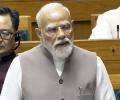
Prime Minister Narendra Modi addressed Parliament on the West Asia crisis, advocating for dialogue and diplomacy, ensuring the safety of Indians in the region, and addressing concerns about fuel and food security.

United States Central Command (CENTCOM) forces have conducted a 'heavy wave of strikes' against numerous Islamic Revolutionary Guard Corps (IRGC) targets in Iran. This action was a direct response to attempted Iranian missile strikes on US forces in West Asia, which were successfully intercepted. The strikes targeted IRGC military command centres, missile and drone facilities, coastal surveillance, and maritime capabilities, aiming to reduce threats posed by Iran and its proxies. US President Donald Trump also issued strong warnings to Tehran, linking the escalation to a recent drone strike on an LNG vessel in Egypt's Damietta Port.

Amidst global energy market volatility driven by the West Asia crisis, Russia has proposed increasing its crude oil and natural gas supplies to India, strengthening bilateral energy ties and aiming for USD 100 billion in annual trade by 2030.

Indian refiners are recalibrating their crude sourcing strategy due to supply disruptions in West Asia, leading to Venezuela and Brazil emerging as top five suppliers in April, replacing traditional sources like Iraq and the United States.
India's wholesale price inflation surged to 3.88 per cent in March, marking the fifth consecutive monthly increase, primarily driven by a sharp rise in crude petroleum, natural gas, and manufactured items amidst the West Asia crisis.

Non-resident Indians (NRIs) in the Gulf region are increasingly purchasing term life insurance policies from India, driven by geopolitical uncertainties in West Asia and the significant cost advantages offered by Indian products, with the GCC region now contributing over half of the total NRI demand.

India's finance ministry anticipates inflation will remain relatively contained in the coming months, supported by a correction in crude oil prices and softening input costs following the cessation of the West Asia conflict, despite earlier spikes in wholesale and retail inflation.

The deployment could include infantry and armoured units, in addition to the 82nd Airborne Division, which is already stationed in the region.

Indian investors have seen their wealth erode by a staggering Rs 48.29 lakh crore since the West Asia war began on February 28, leading to a significant downturn in the BSE Sensex and NSE Nifty, driven by geopolitical tensions and rising crude oil prices.

India's exports experienced their steepest fall in five months, declining by 7.44 per cent in March to $38.92 billion, primarily due to trade uncertainty and geopolitical tensions, with shipments to West Asia contracting by over 50 per cent.

According to the report, the Pentagon is deploying the USS Tripoli ARG, along with the 31st Marine Expeditionary Unit (MEU), part of its own strike group.
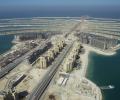
Ongoing geopolitical tensions in West Asia have slowed deal momentum in Dubai's luxury residential market, but Indian high-net-worth individuals (HNIs) are not exiting their marquee assets, with any 'discounted' resale deals attributed to investor liquidity stress rather than geopolitical flight.

Russian President Vladimir Putin is actively working to de-escalate the escalating crisis in the Gulf, engaging with regional leaders following Iran's retaliatory strikes on US facilities after joint US-Israeli strikes against Iran.

The Ministry of External Affairs (MEA) reports that over 1,150 Indian nationals have been evacuated from Iran through land borders into Armenia and Azerbaijan since the start of the West Asia conflict. The MEA also confirmed that three Indians were injured in attacks in the UAE.
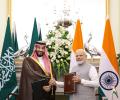
Prime Minister Narendra Modi spoke with Saudi Arabia's Crown Prince Mohammed bin Salman about the ongoing conflict in West Asia, emphasising the need to ensure freedom of navigation and secure shipping lanes.

The Asian Development Bank (ADB) has revised down India's GDP growth forecast for fiscal year 2026-27 (FY27) to 6.6 per cent from an earlier 6.9 per cent, primarily attributing the change to elevated energy prices stemming from the Middle East conflict. Despite this moderation, India is still expected to remain the world's fastest-growing major economy.
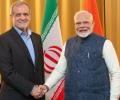
Prime Minister Narendra Modi has welcomed the understanding between the United States and Iran to end the conflict in West Asia, expressing hope that the pact will restore peace, stability, and ensure freedom of navigation in the region. The deal, aimed at ending a 107-day war that caused a global energy crisis, is set for signing on June 19.

Prime Minister Narendra Modi on Thursday discussed with a group of senior ministers the prevailing global security situation and how to maintain supply chain uninterrupted despite conflicts in different zones, including the Strait of Hormuz, the Black Sea, the Red Sea, and the Gulf of Aden.

Larsen & Toubro (L&T) reported a 14 per cent year-on-year increase in Q1 FY27 profit attributable to owners, reaching Rs 3,926 crore, surpassing analyst estimates, despite facing significant supply-chain disruptions in West Asia.

There is no cause for concern, as the overall situation arising out of the crisis is firmly under control, the Centre informed while briefing political parties at the all-party meet.
Moody's Analytics predicts India will remain the fastest-growing major economy in 2026 and 2027, but its pace will moderate due to a global slowdown, geopolitical risks, and financial market volatility, despite the boost from AI demand.

India's foreign exchange reserves increased by USD 964 million to USD 675.157 billion in the week ending July 10, according to the Reserve Bank of India.

The US-Israeli military campaign, dubbed "Operation Epic Fury" by Washington, has entered its third day, with US President Donald Trump stating that operations would continue "until all of our objectives are achieved."

An Indian crew member was killed and six other Indian nationals were among eight injured when Iranian cruise missiles struck two UAE tankers, Mombasa and Al Bahiyah, in the Strait of Hormuz, escalating regional tensions and drawing strong condemnation from the UAE.
